
What is the most terrifying thing you’ve done professionally? For me, it was having to guide over 80 people through an interactive ‘get-to-know-you’ session. These type of sessions can be so awkward so I was totally ready to blow the format up and produce something that was enjoyable and useful for everyone. It was just totally terrifying for me!
I have now done these events a few times (getting better each time – and more out of my comfort zone). So let me tell you how I pull them off.
The basics
The escape room style session has multiple groups doing the same activities to escape the “room”. The groups compete with each other to be the first to finish all the activities, work out the escape code, in order to escape the fastest. There’s a range of fiendish or logical puzzles to complete as well as physical challenges. The variety of games maximise the opportunity for the group to interact with each other and create memorable moments which can be discussed and laughed about later!
Materials
- 1 set of escape room puzzles per team (see below)
- Physical activity instructions (see below)
- Ping pong balls (number depends on activities chosen)
- Chopsticks (number depends on activities chosen)
- Plastic beer cups (number depends on activities chosen)
- Table for each team and physical activities
Puzzles
I used the puzzles created by a professional paper-based escape room creator, Paper Escape Co.
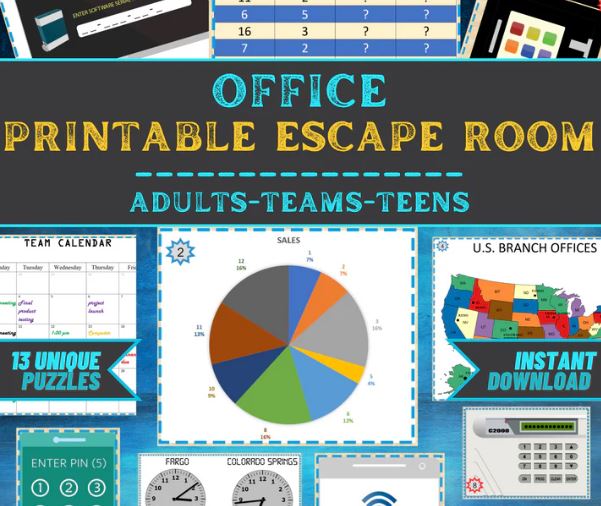
I recommend spending the money on this kit, they are really varied, well thought-out and just the right side of tricky to work out! They also save tons of time. Choose 6 and 10 different puzzles which each give a specific answer. The answer from each puzzle can then be combined to provide a code word which can be used to “escape” the room.
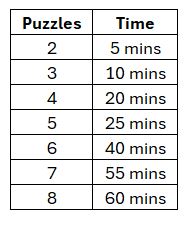
The number of puzzles you choose will depend on how long you want the activity to go on for. The more puzzles you have, the more possible combinations of answers there will be. Use this table to calculate how many puzzles to use.
Here’s an example of a puzzle you could use (I have created this one myself to protect Paper Escape Co’s copyright):
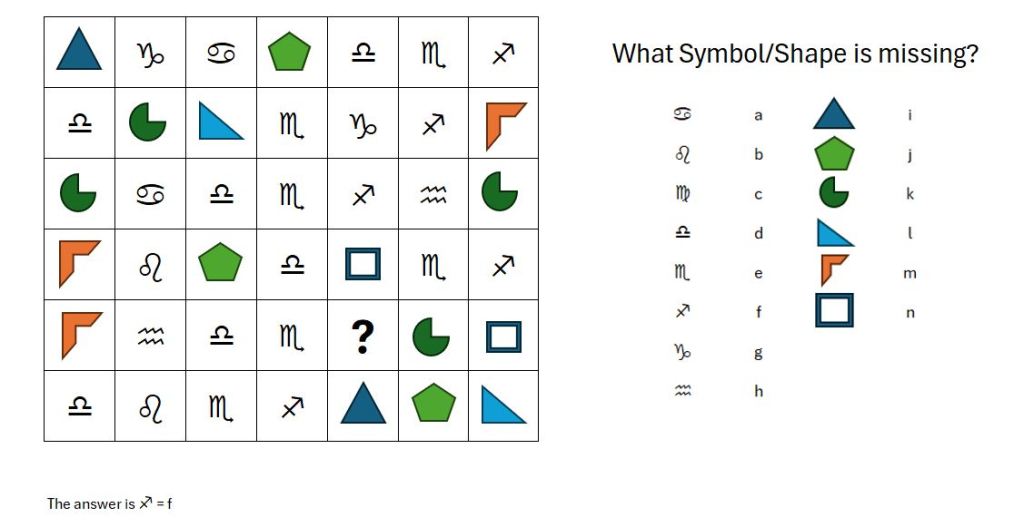
The pack from Paper Escape Co contains hints for the competing teams, which is necessary for some of the more fiendish puzzles.
Physical Activities
It is difficult to find physical activities that keep both the athletic and the sloth-like happy. But I really like the Beat That! selection of physical challenges, and used it for inspiration. Watch the video in the link for ideas on what tasks you can ask the teams to complete.
Directions
Here are my top tips on how to run an escape room session with a large team:
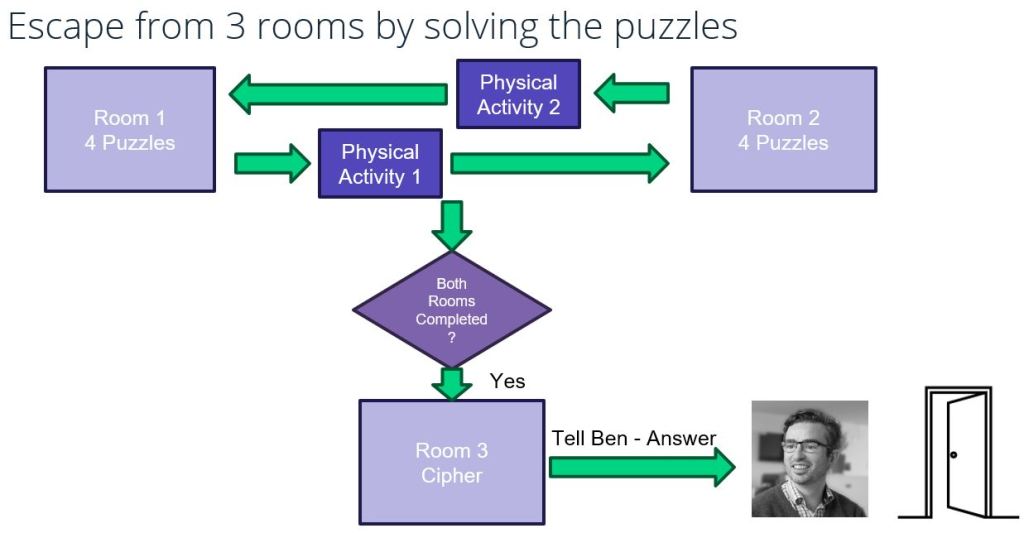
- As a rough guide I recommend you split your group into teams of between 4-8 people and have 2 and 4 physical activities and up to 10 mental activities for them to complete.
- As part of your planning for the session, rope in as much help as you can. You will need a small group of people to help facilitate the session and support the teams through the puzzles and activities. One person can support up to 4 teams or 2 activities. For example for 80 people I had 10 tables and 4 activities – I had 3 people looking after puzzles and 2 people looking after the physical activities (5 helpers in total). Brief the helpers and give them the hints and even the solutions so that they can help the teams. We actually did the puzzles together before the session, so that all the helpers understood what needed to be done.
- Set up the room so that there is 1 table for each team (where they will do all the puzzles), and 1 table per physical activity. I had 14 tables in a very large room!
- Place half of the puzzles on the tables ready for the teams to start.
- Split the attendees into the teams. You can do this however you want, but I love to add a bit of silliness and get everyone to order themselves in a line according to the number of graters they own (cheese, nutmeg, foot!). I then go down the line giving everyone a number between 1 and 10. The number represented the table and team they were on.
- Let them start cracking the puzzles – the helpers can give hints progressively to help them out. I gave the helpers a timesheet for when to start helping the teams; e.g. no clues until after 5 minutes with no puzzles completed.
- Once the puzzles have been completed, move your teams on to the physical activities tables and complete the first and second activity.
- During the time it takes the teams to complete the physical activities, get the helpers to lay out the second half of the puzzles on the puzzle tables.
- Once the two physical activities have been completed, move the teams back to the puzzle tables to complete the second half of the puzzles.
- When they’ve finished the puzzles, move the teams to do the third and forth physical activity.
- Once all activities have been completed they can be given the final puzzle – arrange the letters (the answers to the puzzles) into a passcode and the winning team is the one to complete the passcode and tell the facilitator their answer.
That’s it!
Good luck! Have fun! And let me know how you get on.
 Pragmatic Agile
Leave a comment